Summer Savings ends in

Metal Building vs. Stick-Built Garage: Cost and Durability Compared
Published October 9, 2026
Metal Building vs. Stick-Built Garage: Cost and Durability Compared
Adding a garage is one of the most practical upgrades a property owner can make. It protects vehicles, adds storage, and often becomes a workspace. Before construction begins, though, most buyers face one key decision: build a traditional stick-built garage from wood, or choose a steel building. The right answer depends on how you weigh upfront cost against long-term durability, maintenance, and value. Here is how the two options compare.
Upfront Cost: Where Wood Has an Early Edge
Wood buildings typically cost less at the start than comparable metal structures, and that lower entry price is what draws many buyers to stick-built construction. The comparison changes, however, once you look past the initial invoice.
With a steel garage, the final price depends on size, height, roof style, doors, and optional features. Many metal building providers also include costs that a stick-built project would bill separately. At East Texas Carports, for example, delivery and installation are included at no extra charge, and the same team that manufactures the building also installs it. There are no subcontractors and no separate crew fees. A 10% deposit locks in your price, and buyers who prefer to assemble the building themselves can save 10%, though self-installed buildings are not covered by the warranty.
Financing can also make a metal garage more accessible. Rather than taking out a traditional bank loan, buyers can explore rent-to-own plans with terms from 12 to 60 months and 10% down, including an option that requires no credit check.
Long-Term Cost: Where Metal Pulls Ahead
Total cost of ownership tells a different story than sticker price. When you factor in maintenance, repairs, pest control, repainting, and earlier replacement, metal buildings often prove more economical. The break-even point typically arrives within 10 to 15 years. After that, a steel structure keeps delivering value while a wood structure continues to accumulate expenses.
Stick-built garages require ongoing upkeep. Annual maintenance can include painting or staining, pest treatments, replacing damaged boards, and inspecting for rot. Each of those cycles adds labor and expense. A metal building, by comparison, needs occasional washing, a periodic check of fasteners and seals, and a yearly tightening of screws. That difference in routine care adds up over the life of the building.
Durability in Heat, Humidity, and Storms
Climate plays a major role in how long any structure lasts. High humidity, intense heat, frequent storms, and persistent insect activity all test building materials, and wood is especially vulnerable to these conditions.
How Wood Holds Up
When wood absorbs moisture, it swells and warps, which can pull a structure out of alignment. Sustained moisture also creates ideal conditions for rot and decay. Paint peels under strong sun and humidity, boards crack and split, and roof shingles break down faster in extreme heat. Termites and carpenter ants add another threat, and chemical treatments wear off over time, so they must be reapplied repeatedly.
How Steel Holds Up
Galvanized steel behaves very differently. It does not absorb moisture, so it stays dimensionally stable regardless of humidity. The galvanizing process creates a zinc barrier that shields the steel from corrosion, and the American Galvanizers Association notes that this type of protection can provide maintenance-free longevity for decades. Termites cannot eat steel, and rodents cannot chew through metal walls, which removes two of the most common problems that affect wooden structures.
Wind resistance is another important factor. A properly engineered and anchored steel building can stand up to severe weather, and industry groups such as the Metal Building Manufacturers Association set standards for wind load performance. At East Texas Carports, garages are built with 14-gauge or 12-gauge steel framing. The 14-gauge frame is rated for 120 mph winds, the 12-gauge frame is rated for 140 mph, and both are rated for a 35 PSF snow load when installed with certified anchors and bracing.
Lifespan Compared
A well-maintained wood building in a Southern climate might last 20 to 30 years before it needs major structural repairs or replacement, and that estimate assumes diligent upkeep. Metal buildings regularly exceed 50 years of service with minimal maintenance.
Warranty coverage reflects this difference in confidence. Sherwin-Williams coil coatings on steel panels resist fading, chipping, and rust, and they come with a 20-year limited paint warranty. Frame coverage increases with heavier steel, and you can review the full warranty details to see how gauge affects protection.
Fire Resistance, Insurance, and Resale Value
Steel does not combust. Metal structures slow the spread of fire and often survive fires that would destroy a wood building. Many insurers recognize this and offer lower premiums for metal structures, which creates a savings that continues year after year.
Resale value also tends to favor metal construction. Buyers understand the durability and low maintenance that steel offers, so properties with quality metal buildings often sell faster and command stronger prices than those with aging wooden structures.
Comfort and Energy Efficiency
A wood garage may insulate well at first, but its performance can decline as warping and settling open gaps that let air leak in. Steel buildings do not warp or settle the same way, so insulation stays effective over time. The U.S. Department of Energy explains that insulation reduces heating and cooling costs by slowing heat flow, and that reflective systems are particularly useful in warm climates. Bubble reflective insulation is available for metal garages and can be added to the roof, sides, and ends.
Build Time and Flexibility
Stick-built construction often takes weeks of on-site work. A custom steel garage typically has a lead time of 6 to 8 weeks, and most installations take only a few hours to one day once the crew arrives. Steel garages can be installed on concrete, dirt, gravel, or asphalt, with anchors matched to the site. If you want a concrete slab, a local contractor will need to pour it before installation.
Customization is broad as well. Buyers can choose from 1-car, 2-car, or 3-car layouts or design a custom size. Options include a vertical roof for heavy rain and wind, a more budget-friendly horizontal roof for milder climates, roll-up and walk-in doors, windows, lean-tos, and more than 20 colors. You can browse popular metal garage configurations to see what fits your property.
Which Option Is Right for You?
If you need a structure for only a few years, a stick-built garage may meet your needs. For a long-term investment, however, steel offers clear advantages: lower lifetime maintenance, resistance to rot and pests, stronger wind ratings, fire resistance, and a lifespan that can exceed 50 years. Wood may win on the first invoice, but metal tends to win over the life of the building.
RECENT ARTICLES
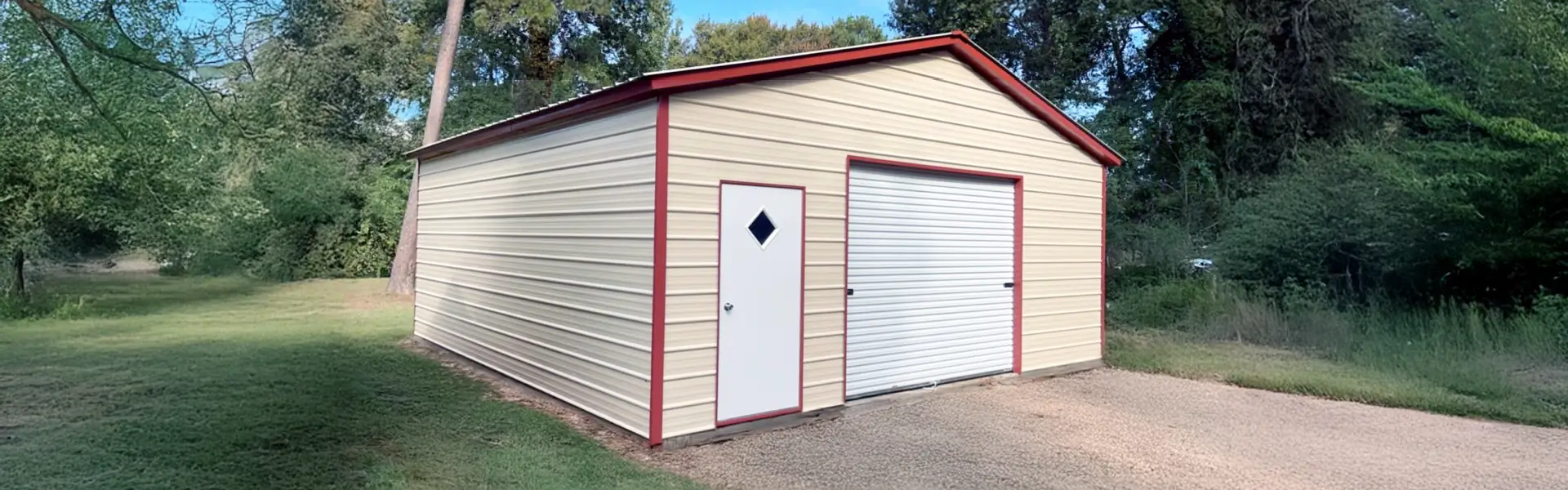
October 9, 2026
Metal Building vs. Stick-Built Garage: Cost and Durability Compared
Metal Building vs. Stick-Built Garage: Cost and Durability Compared Adding a garage is one of the most practical upgrades a…
Read Full Article
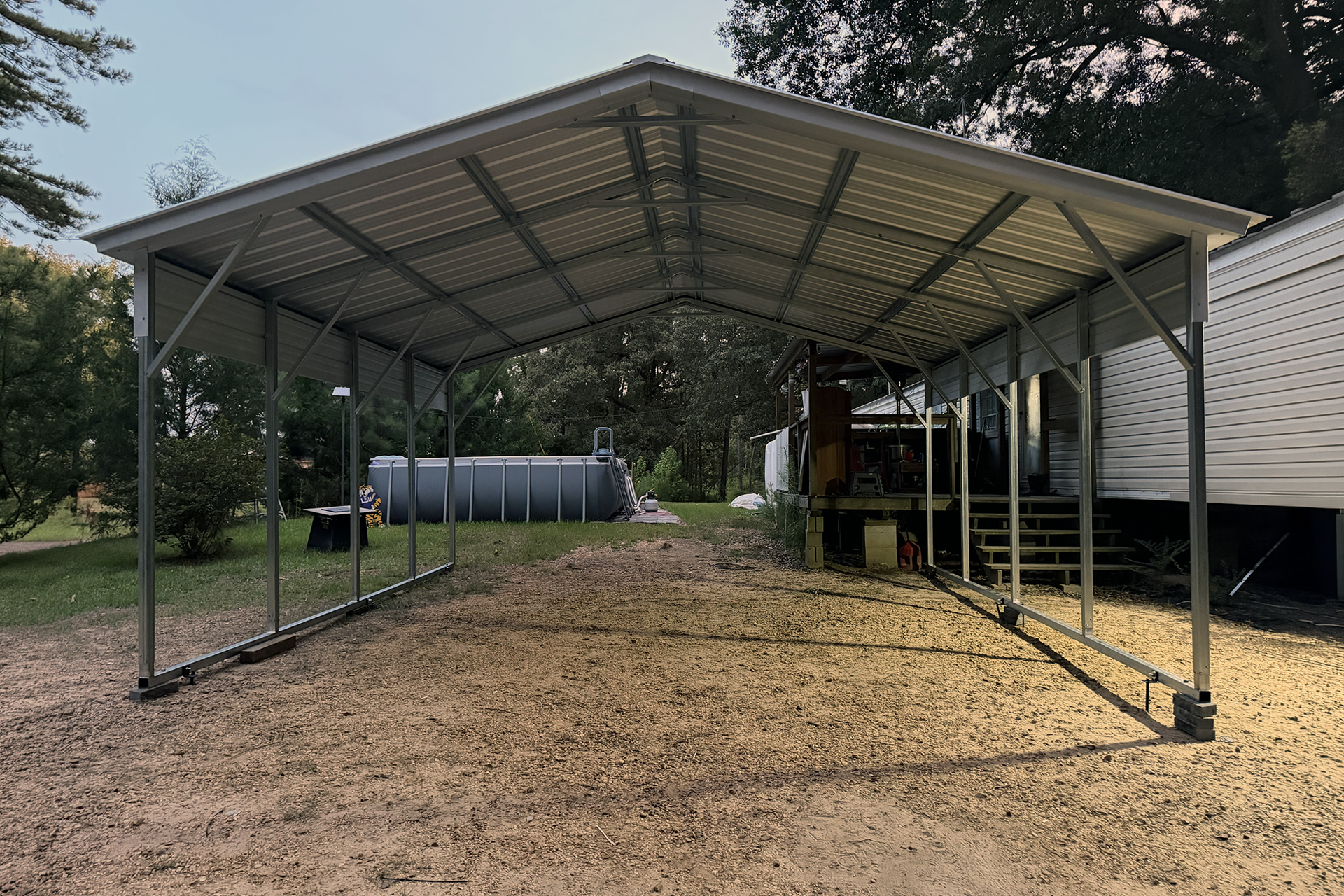
October 1, 2026
What Size Carport Do I Need?
What Size Carport Do I Need? A Sizing Guide for East Texas Trucks, Boats, and RVs Most carport regrets come…
Read Full Article
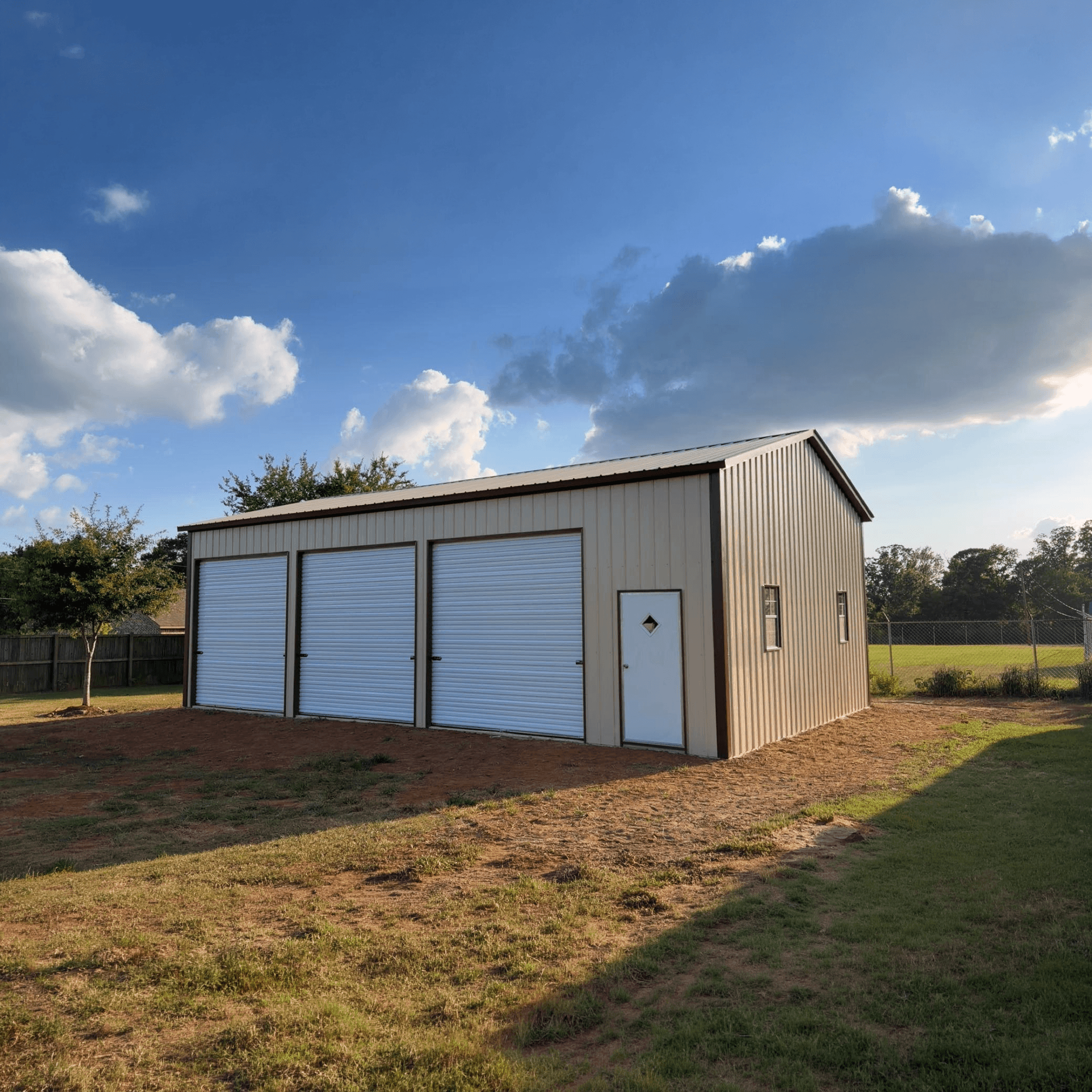
September 25, 2026
Keeping Pests Out of Your Metal Building
A steel building is one of the toughest structures you can put on your property. It won’t rot, termites can’t…
Read Full Article
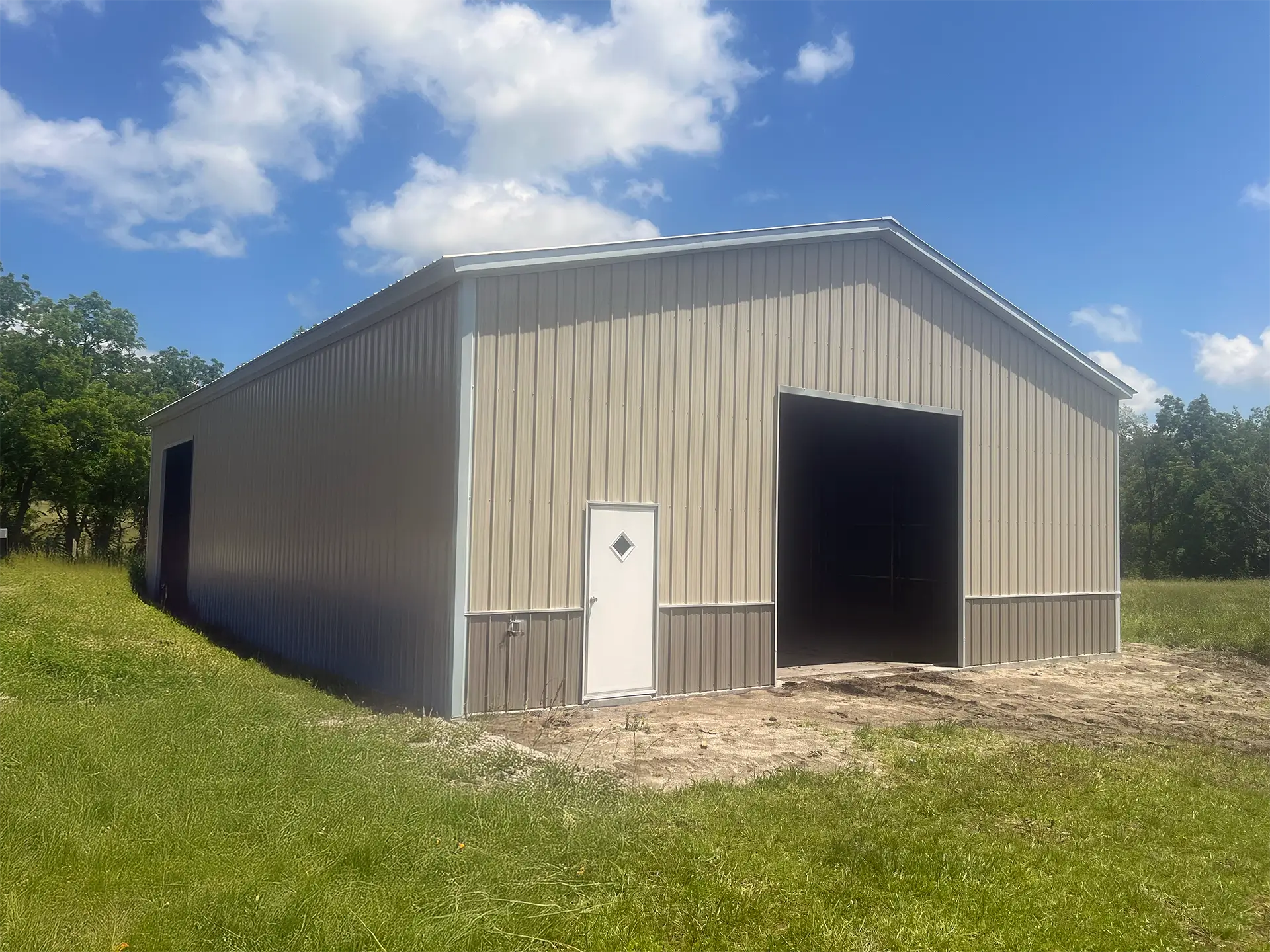
September 18, 2026
Does a Metal Carport Lower Homeowners Insurance?
Most homeowners think about a carport or garage in terms of what it protects. Your truck. Your boat. Your lawn…
Read Full Article