Summer Savings ends in

Does a Metal Carport Lower Homeowners Insurance?
Published September 18, 2026
Most homeowners think about a carport or garage in terms of what it protects. Your truck. Your boat. Your lawn equipment. But there is another benefit that often gets overlooked, and it has nothing to do with what is parked underneath.
The structure itself can play a role in your homeowners insurance. Depending on your insurer, your location, and how the building is constructed, a steel carport or garage may help your case when it comes time to talk coverage and rates.
This is not a guarantee, and every insurance company handles things differently. But understanding how insurers view steel structures can help you make a smarter decision, and it can give you better questions to bring to your agent.
Why Insurance Companies Care About What You Build
Insurance companies price risk. That is the whole business. When they look at a home, they are asking one simple question: how likely is this property to generate a claim, and how expensive would that claim be?
A structure that resists wind, hail, fire, and rot is a lower risk than one that does not. That is true whether you are talking about your house or the carport sitting beside it.
Wood structures are more vulnerable to rot, termites, and fire. They also tend to suffer more damage in high winds because panels and framing can weaken over time. Steel does not carry those same weaknesses, and insurers know it.
Wind and Hail Resistance Matters More in Texas Than You Think
If you live anywhere in East Texas, Oklahoma, Arkansas, Louisiana, Mississippi, or Kansas, you already know the weather does not play fair. Thunderstorms roll through fast. Hail shows up without much warning. And in the areas closer to the Gulf, tropical storms and hurricane bands are a real seasonal concern.
Insurance companies pay close attention to how a structure holds up under these conditions.
How Steel Performs Against Wood
A properly engineered steel carport or garage is built to handle heavy wind loads and resist the kind of impact damage that hail causes. The panels do not absorb moisture the way wood siding can, which means less risk of warping, mold, or slow structural decay.
Wood structures, especially older ones, often were not built with modern wind ratings in mind. That gap matters to an insurer evaluating risk on your property. If you want a closer look at how the two materials compare over time, our article on metal vs. wood in southern climates breaks it down in more detail.
What Insurers Look For in a Metal Structure
Not every metal building is treated the same by an insurance company. A few factors tend to matter most.
Engineered Certifications and Anchoring
Many insurers want to see that a structure was engineered to meet local wind load requirements and that it is properly anchored to the ground. A carport that is not secured correctly is a liability, both for your safety and for your insurance risk profile.
This is one reason it matters who builds your structure. A building that comes with engineering documentation and a proper anchoring system gives you something concrete to show your insurance agent, rather than just a verbal assurance that it is sturdy.
Permanent vs. Portable Structures
There is also a difference between a permanent structure and a portable one. A carport that is bolted to a concrete foundation and built to code is generally viewed more favorably than a lightweight, freestanding frame that can shift or blow over in a storm.
If you are comparing options, ask whether the structure you are considering is designed for permanent installation. This detail can affect both your safety and how your insurer sees the building.
Documentation That Can Help Your Case
When you talk to your insurance agent about adding a structure to your policy, paperwork matters. Here is what is worth having on hand.
Keep a copy of your purchase agreement showing the specifications of the building, including gauge of steel, roof style, and any reinforcement details. Keep any engineering certification provided by the manufacturer, especially one tied to wind or snow load ratings for your area. Keep photos of the finished structure and the anchoring system once installation is complete.
Having this information ready can make conversations with your insurer faster and can support your case if you are asking about a rate adjustment or need to file a claim down the road.
Warranty Coverage Can Strengthen Your Claim
A strong warranty is not just peace of mind for you. It is also a signal to an insurance company about the quality of the structure.
When a manufacturer stands behind a building with a frame warranty and a paint warranty, that tells an insurer the company is confident in how the structure will perform over time. It is one more piece of evidence that the building was made to last, not thrown together to save money.
Keep your warranty paperwork with your other documentation. If you ever need to discuss coverage or file a claim, having proof of a long-term warranty can work in your favor.

Garages vs. Open Carports: Does Coverage Differ?
This is a common question, and the honest answer is that it depends on your insurer and your policy. In general, fully enclosed garages may be viewed differently than open carports because they offer more protection for whatever is stored inside, and they often have additional features like doors and windows that add to the replacement value of the structure.
An open carport still provides real protection from sun, hail, and rain, but it may be classified differently on your policy since there is less enclosure involved.
The best move is to ask your agent directly how each option would be handled before you finalize your design. That way there are no surprises later.
Steps to Take Before You Call Your Insurance Agent
A little preparation goes a long way. Before you reach out to discuss coverage, consider doing the following.
Measure the exact dimensions of the planned structure, including height, width, and length. Confirm the gauge of steel being used, since thicker gauge steel is generally viewed as more durable. Ask your builder whether the structure will be engineered for your local wind zone. Request a copy of the warranty in writing. Take note of how the structure will be anchored, whether that is concrete footers, mobile home anchors, or another method.
Walking into that conversation with answers ready shows your insurer that you take the investment seriously, and it usually makes the process smoother.
Building With East Texas Carports Makes the Process Easier
At East Texas Carports, every structure is manufactured and installed by our own team, not handed off to a subcontractor. That means consistency from the first phone call to the final bolt.
Our carports, garages, barns, and workshops are backed by a 10-year frame warranty and a 20-year paint warranty, and each structure can be customized with the roof style, paint finish, and accessories that fit your property using our online design tool. We also handle free delivery and installation throughout Texas, Oklahoma, Arkansas, Louisiana, Mississippi, and Kansas, with flexible rent-to-own financing available if you would rather spread out the cost.
Because we build to order and stand behind our work, customers have the documentation and confidence they need when it is time to talk to an insurance agent. You are not left guessing about specifications or chasing down paperwork after the fact. Have more questions before you buy? Our FAQ page covers the basics, and our customer reviews show what the process looks like from start to finish.
A Few Honest Caveats
It is worth being upfront about a few things. Insurance discounts and classifications vary widely by company, by state, and even by the specific agent handling your policy. A steel structure is not a guaranteed discount, and some insurers may not adjust your premium at all based on an added carport or garage.
The real value here is twofold. First, a well-built steel structure genuinely holds up better in severe weather, which reduces your actual risk of damage and loss, regardless of what shows up on a bill. Second, having strong documentation puts you in the best possible position if you do want to have that conversation with your insurer.
Think of it less as a promised discount and more as stacking the odds in your favor, both for your wallet and for your peace of mind during storm season.
Frequently Asked Questions
Does adding a carport automatically raise my insurance rate?
Not necessarily. Adding any structure to your property can increase your dwelling coverage needs, since it adds replacement value. Whether your premium goes up, stays flat, or comes with a credit for storm resistance depends entirely on your carrier. The only way to know for certain is to ask your agent directly once you have the specifications in hand.
Do I need to tell my insurance company about a new carport or garage?
In most cases, yes. Most policies require you to report significant additions to your property, including detached structures like carports, garages, and workshops. Reporting it up front is much easier than discovering a coverage gap after a storm has already caused damage.
Is a metal building always better than wood for insurance purposes?
Not in every single case, but steel generally has an edge when it comes to wind resistance, fire resistance, and long-term durability. Insurers weigh many factors beyond material, including age of the structure, how it was installed, and local building codes. Steel simply gives you a stronger starting point.
Final Thoughts
A metal carport or garage does more than protect your vehicles and equipment. It can also be part of a smarter approach to protecting your property and your budget.
The key is choosing a structure that is engineered properly, anchored correctly, and backed by a real warranty. From there, the conversation with your insurance agent becomes much easier, because you are not asking them to take your word for it. You have the paperwork to back it up.
If you are ready to explore a custom carport, garage, or workshop built to hold up against everything East Texas weather can throw at it, reach out to East Texas Carports for a free quote. Our team can walk you through roof styles, sizing, and financing options, and help you design a structure that fits both your property and your peace of mind.
RECENT ARTICLES
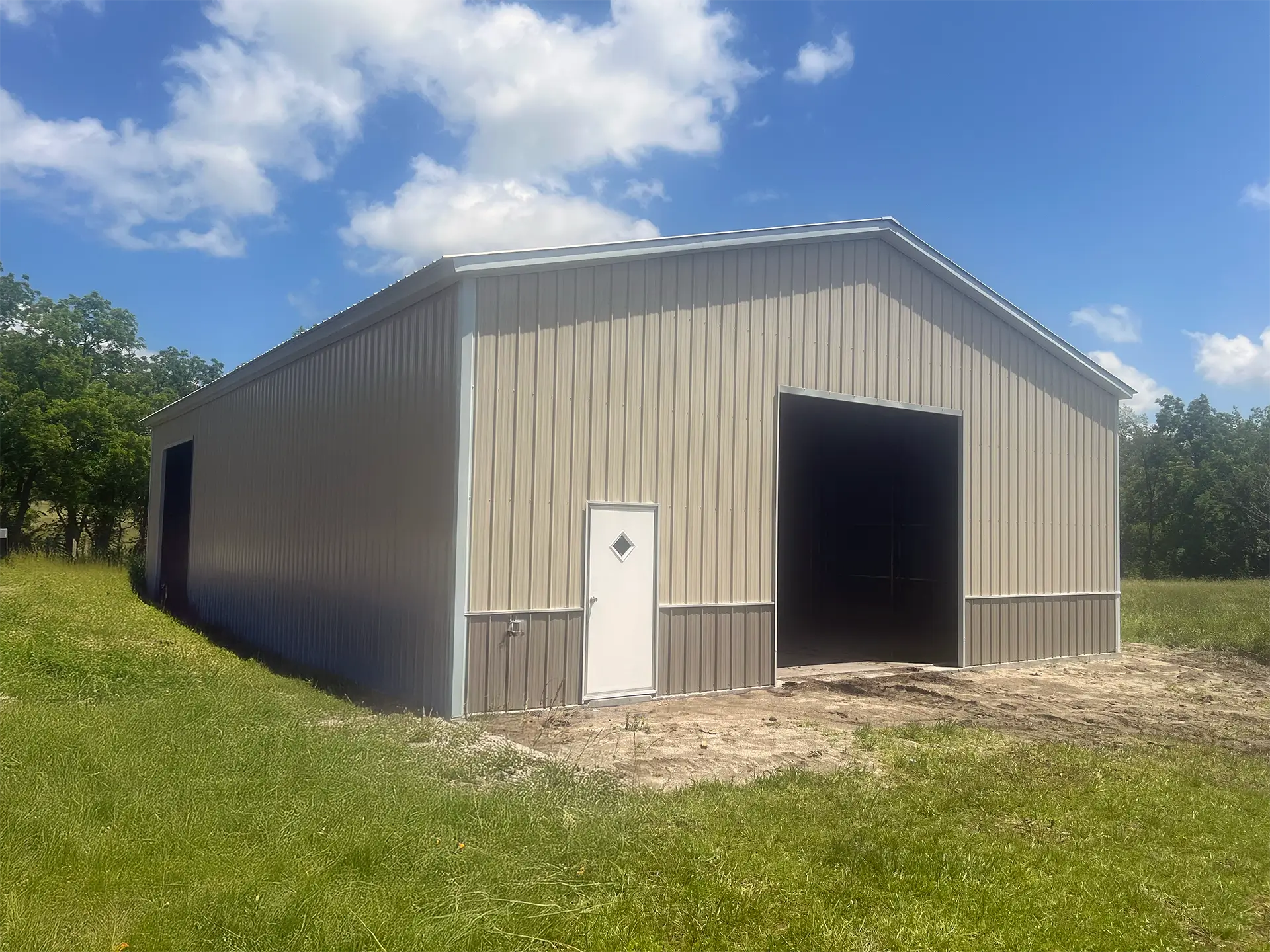
September 18, 2026
Does a Metal Carport Lower Homeowners Insurance?
Most homeowners think about a carport or garage in terms of what it protects. Your truck. Your boat. Your lawn…
Read Full Article
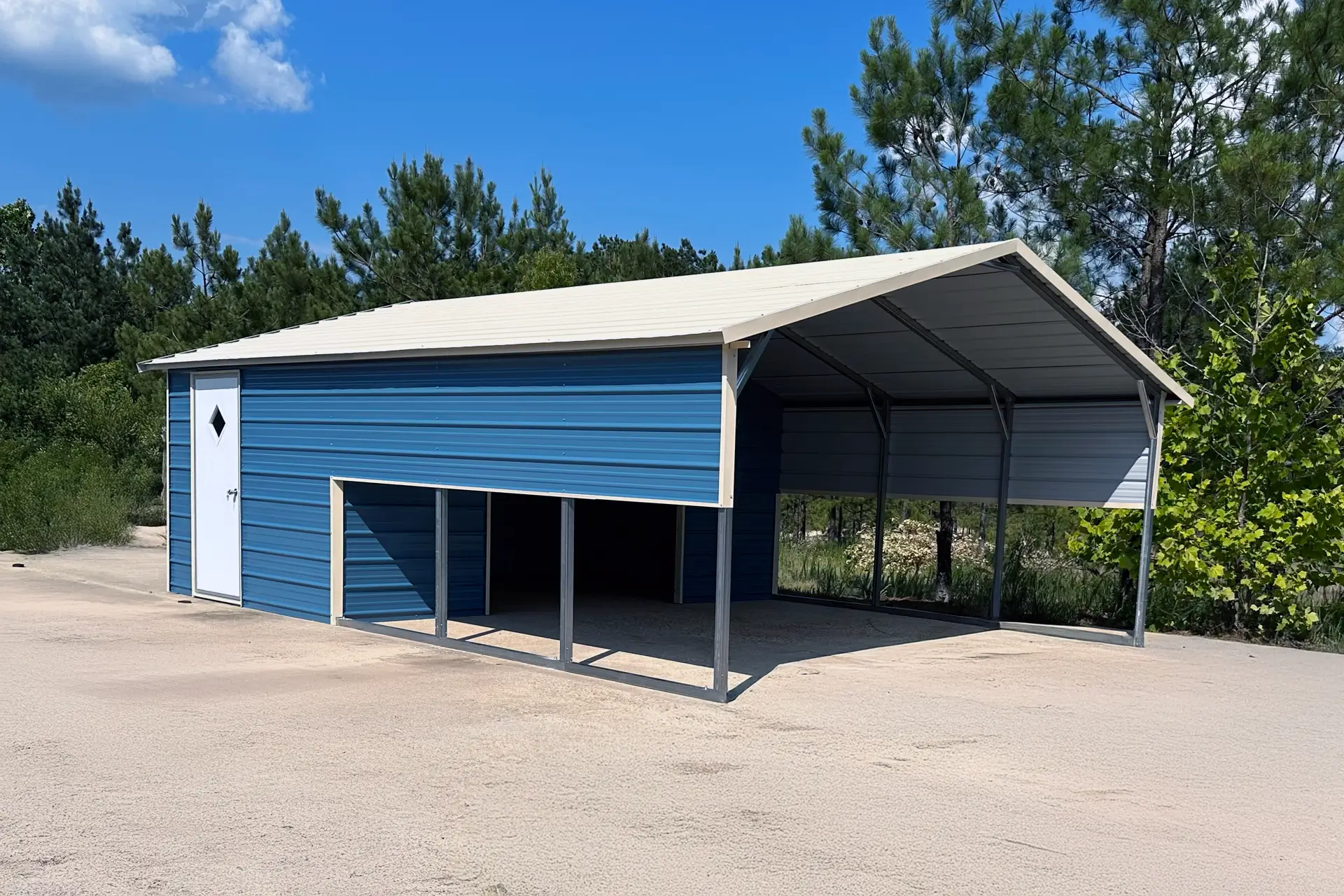
September 11, 2026
Benefits of East Texas Carports for Homeowners
East Texas homeowners need covered parking and storage that can handle heat, humidity, heavy rain, hail, and sudden storms without…
Read Full Article
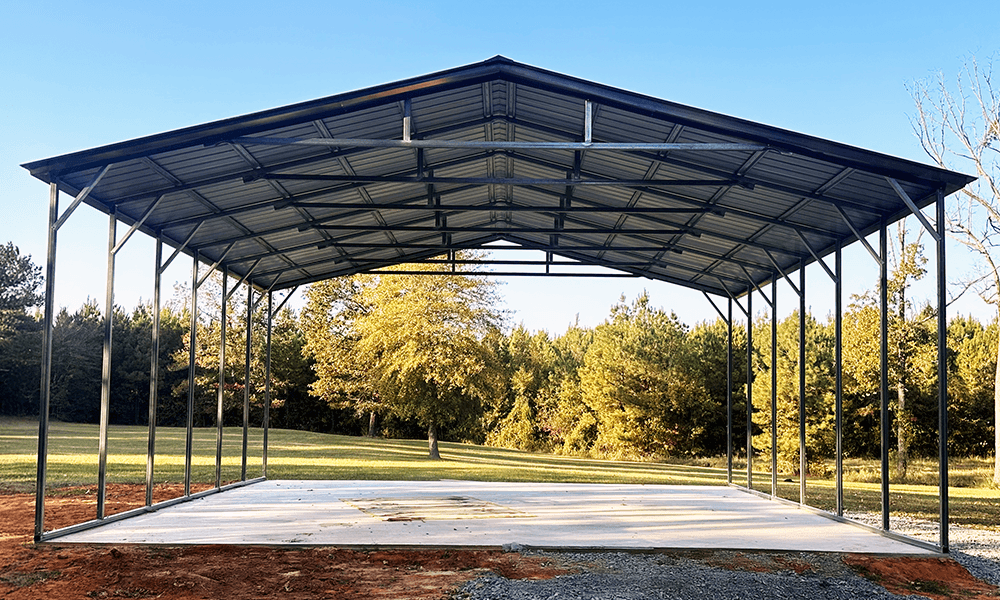
September 4, 2026
Cleaning and Caring for Your Carport’s Exterior
Your carport’s exterior takes on more punishment than almost any other part of your property. Sun, rain, pollen, and road…
Read Full Article
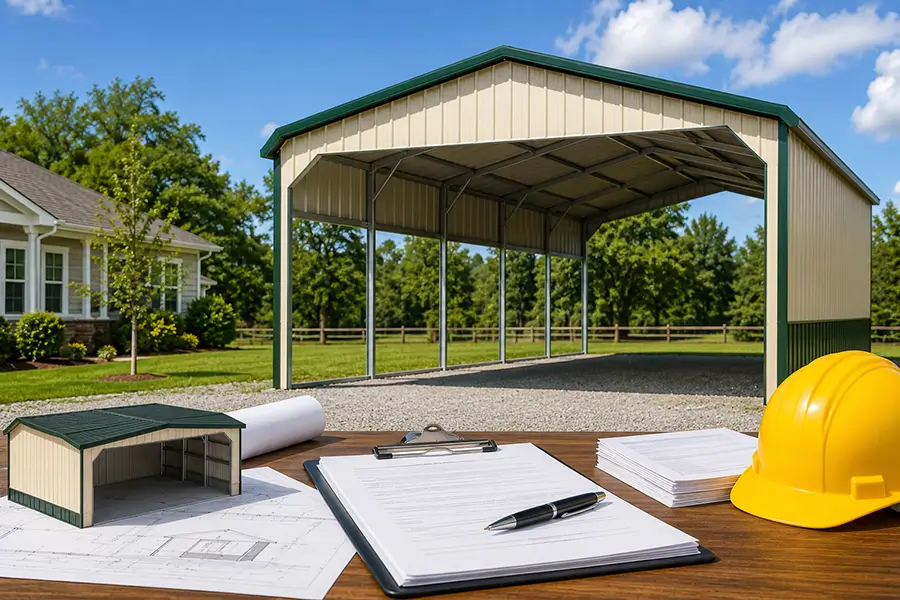
August 24, 2026
Metal Carport Permits Made Easy: Homeowner’s Guide
Metal Carport Permits Made Easy: Homeowner’s Guide Adding a metal carport is one of the fastest ways to protect vehicles,…
Read Full Article