Call us
(903) 234-8922
Site Prep and Installation
Do You Need a Permit for a Metal Building in Kansas?
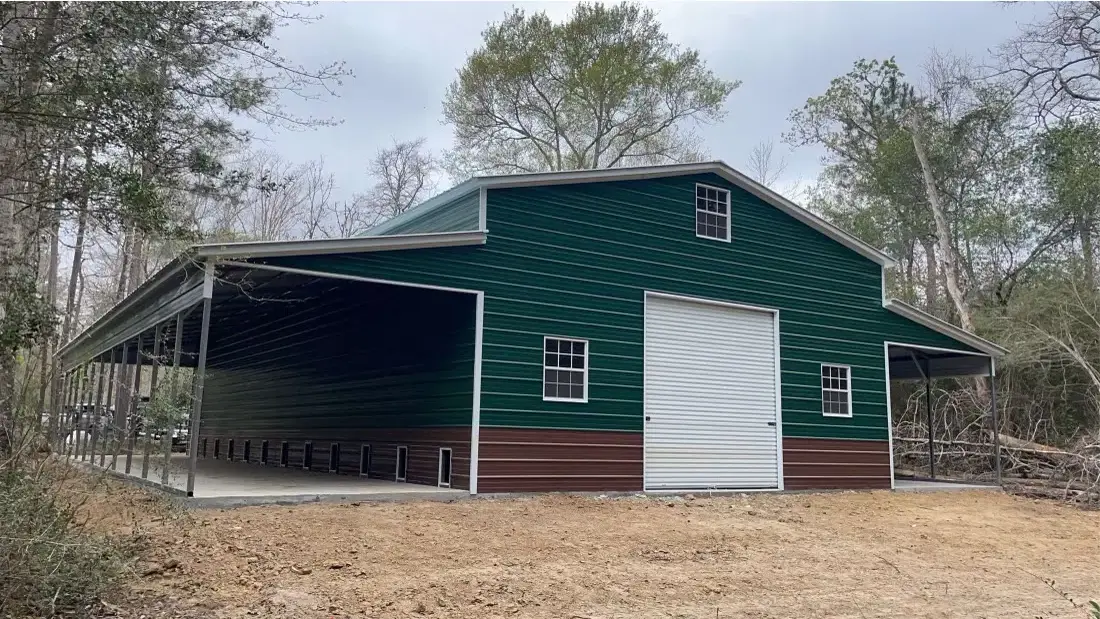
Kansas does not have a statewide building code for homes. Cities and counties adopt their own, so whether you need a permit for a metal carport, garage or barn depends on where your property is. Here is how it works.
Last checked: November 2026. Rules change, and cities and counties set many of their own, so always confirm with your local office before install day. This guide is general information, not legal advice.
The Short Answer
- Inside city limits: plan on a building permit. Kansas cities adopt and enforce their own codes.
- Outside city limits: it depends on your county. Some counties have building codes and zoning, and others do not.
- Farm buildings: county zoning does not apply to land and buildings used for agriculture, except floodplain rules.
No Statewide Code
The International Code Council notes that Kansas does not enforce a statewide building code but lets local governments adopt their own. The state enforces codes only on state-owned property. That means every city and county can have different rules.
Inside City Limits
Plan on needing a permit in town. Cities typically check setbacks, height and accessory-building rules.
Under the model residential code, a one-story detached accessory building of 200 square feet or less does not need a permit. Many cities change that number, and most carports and garages are bigger anyway. A 12×20 carport is already 240 square feet.
Call your city’s permit office with your building size (W×L×H) and where it will go.
Outside City Limits
Some Kansas counties have adopted building codes and zoning for unincorporated areas, and some have not. Start with your county’s planning, zoning or codes office.
Farm and Ranch Buildings
Kansas law says county zoning regulations do not apply to land used for agricultural purposes, or to buildings put up on that land for agricultural purposes, as long as they are used that way (K.S.A. 12-758(b); see also 19-2908). Floodplain regulations in designated floodplains still apply.
Your county decides whether a use counts as agriculture. Douglas County, for example, says land and buildings used only for agriculture are exempt from county zoning, and its zoning office helps owners confirm whether a use qualifies. A barn for hay and equipment on a working farm is the kind of use the exemption is meant for. A shop for a side business may not qualify.
Permits That Can Still Apply
- Floodplain permit. If any part of your site is in a FEMA flood zone, communities in the National Flood Insurance Program must require a permit for new construction there (44 CFR 60.3). Look up your address on the FEMA Flood Map Service Center and call your local floodplain administrator. This applies in the county as well as in town, wherever the county takes part in the National Flood Insurance Program. In Kansas, this applies to farm buildings too.
- HOA and deed restrictions. Many subdivisions limit building size, color, height or placement, even outside city limits. Get written approval before you order.
- Buried utility lines. Ground anchors go into the soil, so have lines marked before install day. The Kansas Corporation Commission says homeowners and excavators must request locates at least two working days before digging.
What to Have Ready
- Building size (width × length × height) and type: open carport, partly enclosed or fully enclosed
- A simple site plan with property lines, your house, and the distance from the new building to each
- Engineered drawings for your building (we provide these)
- Your anchor type and surface: concrete, asphalt, gravel or dirt. See our anchors guide.
- Your HOA approval letter, if you have an HOA
Bring the size and location when you first call your permit office. Most offices can tell you in one call whether you need a permit and what to send.
How We Help With Permits
We provide the engineered drawings most permit offices ask for. Our 14-gauge frames are rated for winds up to 120 mph, and our 12-gauge frames up to 140 mph with certified anchors. Some areas call for a higher rating, so tell us what your permit office requires. Learn more in our wind and snow load guide.
Have a permit question? Call (903) 234-8922 and press 2 for support, scheduling and permits. When your permit is in hand, our site prep guide shows how to get ready for install day.
Who to Call
| If your property is… | Start with |
|---|---|
| Inside city limits | The city’s building or permits office |
| In the county, outside city limits | The county planning, zoning or codes office |
| Farm or ranch building | The county zoning office, to confirm the agricultural use |
| In a flood zone | Your local floodplain administrator |
Building in another state? See our permit guides for Texas, Oklahoma, Arkansas, Louisiana, Mississippi, or the general permit guide.
See where we install on our Kansas service area page.
Sources
- International Code Council: Kansas code adoption
- K.S.A. 12-758 (county zoning; agricultural exemption)
- K.S.A. 19-2908 (agricultural use exemption)
- Douglas County: Do the regulations apply to my agricultural use?
- Kansas Corporation Commission: Safe Digging Month
- 44 CFR 60.3 (floodplain management permits)
Ready to Price Your Metal Building?
Get a free, no-obligation quote, or design your building in our free 3D tool and see it from every angle.
Keep Reading
View All Articles