Customer Service
(903) 234-8922

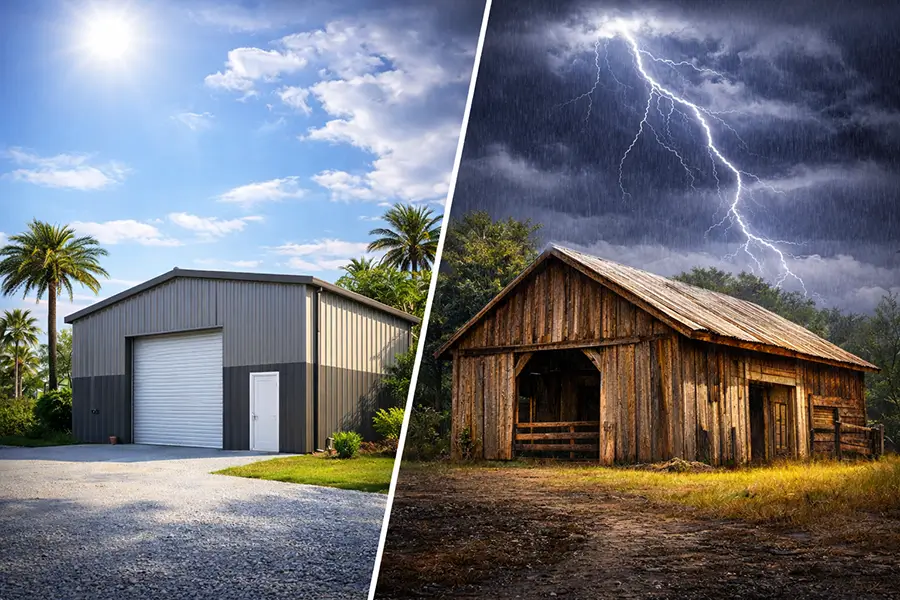
Metal Buildings vs. Wood Buildings: Which Lasts Longer in Southern Climates?
Previous: Metal Carport Guide: Choosing, Financing & Maintenance
Next: Why More Texas Businesses Are Switching to Metal Buildings
Introduction: The Battle Against Southern Weather
When you're investing in a new structure for your property, longevity matters. Southern climates present unique challenges that can significantly impact building materials. High humidity, intense heat, frequent storms, and persistent insect activity create a perfect storm of conditions that test any structure's durability.
The choice between metal and wood buildings isn't just about initial cost. Rather, it's about understanding which material will stand strong against the relentless Southern weather year after year. Let's examine how these two popular building materials perform in the demanding conditions found across the Southern United States.
Understanding the Southern Climate Challenge
The South experiences weather patterns that accelerate material degradation. According to the National Oceanic and Atmospheric Administration, Southern states face average humidity levels exceeding 70% throughout much of the year. This moisture-saturated air creates ideal conditions for rot, mold, and corrosion.
Moreover, Southern regions endure temperature extremes. Summer heat regularly pushes past 95°F, while winter conditions can bring sudden freezes. These temperature swings cause materials to expand and contract repeatedly. Consequently, structural integrity becomes compromised over time.
Hurricane season brings another layer of concern. Coastal and inland areas alike face high winds and torrential rains. Therefore, building materials must withstand not only daily weather stress but also periodic severe weather events.
How Wood Buildings Perform in Southern Heat and Humidity
Wood has served as a traditional building material for centuries. However, the Southern climate poses significant challenges to wooden structures. Moisture absorption represents the primary concern for wood in humid environments.
When wood absorbs moisture, several problems emerge. First, the material swells and warps, leading to structural misalignment. Additionally, sustained moisture creates perfect conditions for rot and decay. The Forest Products Laboratory reports that wood decay fungi thrive in conditions with moisture content above 20% – exactly what Southern humidity provides.
Termites and carpenter ants present another serious threat. These wood-destroying insects cause billions in damage annually across Southern states. Even with chemical treatments, wood remains vulnerable throughout its lifespan. Treatments wear off over time, requiring repeated applications and ongoing maintenance costs.
Furthermore, wood buildings demand regular upkeep. Paint peels in intense sun and humidity. Boards crack and split. Roof shingles deteriorate faster in extreme heat. Each maintenance cycle adds expense and labor to the building's total cost of ownership.
The Durability Advantage of Metal Buildings
Metal buildings, particularly those constructed from galvanized steel, offer superior performance in Southern climates. Steel doesn't absorb moisture like wood does. Instead, it remains dimensionally stable regardless of humidity levels.
Quality metal buildings feature protective coatings that prevent rust and corrosion. Modern galvanization processes create a zinc barrier that shields steel from moisture damage. This protection lasts for decades without requiring reapplication.
Insects cannot damage metal structures. Termites can't eat steel, which eliminates a major maintenance concern entirely. Whether you're considering a metal garage for storing vehicles or a workshop for your business, metal construction provides superior protection against pests. Similarly, rodents cannot chew through metal walls, protecting your investment from another common problem plaguing wooden structures.
Wind resistance represents another significant advantage. Metal buildings can withstand hurricane-force winds when properly engineered and anchored. The Metal Building Manufacturers Association provides standards ensuring these structures meet rigorous wind load requirements. Many metal buildings in coastal areas have survived direct hurricane hits with minimal damage.
Comparing Lifespan and Maintenance Requirements
A well-maintained wood building in the South might last 20 to 30 years before requiring major structural repairs or replacement. However, this lifespan assumes diligent maintenance including regular inspections, pest treatments, painting, and repairs.
In contrast, metal buildings regularly exceed 50 years of service life with minimal maintenance. Some manufacturers offer warranties spanning 20 to 40 years, demonstrating confidence in their product's longevity. You can explore various configurations and pricing using the interactive 3D building designer to see exactly how your investment will perform over time. The difference becomes even more pronounced when considering total maintenance costs over the structure's lifetime.
Annual maintenance for wood buildings includes painting or staining, treating for pests, replacing damaged boards, and inspecting for rot. These costs accumulate significantly over decades. Metal buildings require occasional washing and inspection of fasteners and seals – a far less intensive and expensive maintenance schedule.
Fire Resistance and Insurance Implications
Southern states experience thousands of wildfires annually, particularly during dry seasons. Wood's flammability creates obvious risks. Once ignited, wooden structures burn rapidly and completely.
Metal buildings offer superior fire resistance. Steel doesn't combust, though extreme heat can compromise structural integrity. However, metal structures significantly slow fire spread and often survive fires that would completely destroy wood buildings.
Insurance companies recognize this difference. Many insurers offer lower premiums for metal structures compared to wood buildings. These savings continue year after year, adding another financial advantage to metal's longevity benefits. Additionally, some areas with high wildfire risk may restrict wood construction entirely, making metal the only viable option.
Energy Efficiency Over Time
Energy performance affects both operating costs and comfort. Wooden buildings can provide good insulation initially, but their performance degrades as gaps develop from warping and settling. Air leakage increases heating and cooling costs while reducing comfort.
Modern metal building systems incorporate advanced insulation packages that maintain performance over decades. Spray foam insulation combined with reflective barriers creates highly efficient thermal envelopes. Because metal structures don't warp or settle like wood, these insulation systems maintain their effectiveness throughout the building's life.
The U.S. Department of Energy emphasizes that proper insulation and air sealing significantly reduce energy consumption. Metal buildings maintain their tight construction over time, delivering consistent energy performance year after year.
Cost Analysis: Initial Investment vs. Long-Term Value
Wood buildings typically cost less initially than comparable metal structures. This lower upfront cost attracts many buyers. However, comprehensive cost analysis must consider the entire ownership period.
When factoring in maintenance, repairs, pest control, repainting, and earlier replacement, metal buildings often prove more economical. The break-even point typically occurs within 10 to 15 years. After that, metal buildings continue delivering value while wood structures accumulate increasing expenses.
Resale value also favors metal construction. Buyers recognize the durability advantages and lower maintenance requirements. Consequently, properties with quality metal buildings often command premium prices and sell faster than those with aging wooden structures.
Making the Right Choice for Your Property
Several factors should guide your decision. Consider your timeline – if you only need the structure for a few years, wood might suffice. However, for long-term investments, metal clearly outperforms wood in Southern climates.
Think about your maintenance capacity and budget. Do you have time and resources for regular upkeep? Or would you prefer a structure that largely takes care of itself? Your answers will point toward the appropriate material choice. Using the 3D design tool, you can visualize different options and understand the long-term value proposition for your specific needs.
Location matters significantly as well. Properties in coastal hurricane zones, areas with high termite pressure, or wildfire-prone regions particularly benefit from metal construction's superior resistance to these threats. Texas property owners across the state have found that custom metal buildings deliver exceptional performance regardless of local conditions.
Conclusion: Durability That Stands the Test of Time
Southern climates demand building materials that can withstand extraordinary conditions. While wood buildings have served admirably in many applications, metal structures simply last longer with less maintenance in hot, humid, storm-prone environments.
The evidence clearly favors metal construction for durability, longevity, and total cost of ownership. From superior moisture resistance to complete immunity against wood-destroying insects, metal buildings address every major challenge the Southern climate presents.
When you're ready to invest in a structure that will serve your needs for decades to come, contact East Texas Carports to explore your options. The right building material today means fewer headaches and expenses tomorrow.