Call us
(903) 234-8922
Steel Building Basics
Wind and Snow Load Ratings Explained
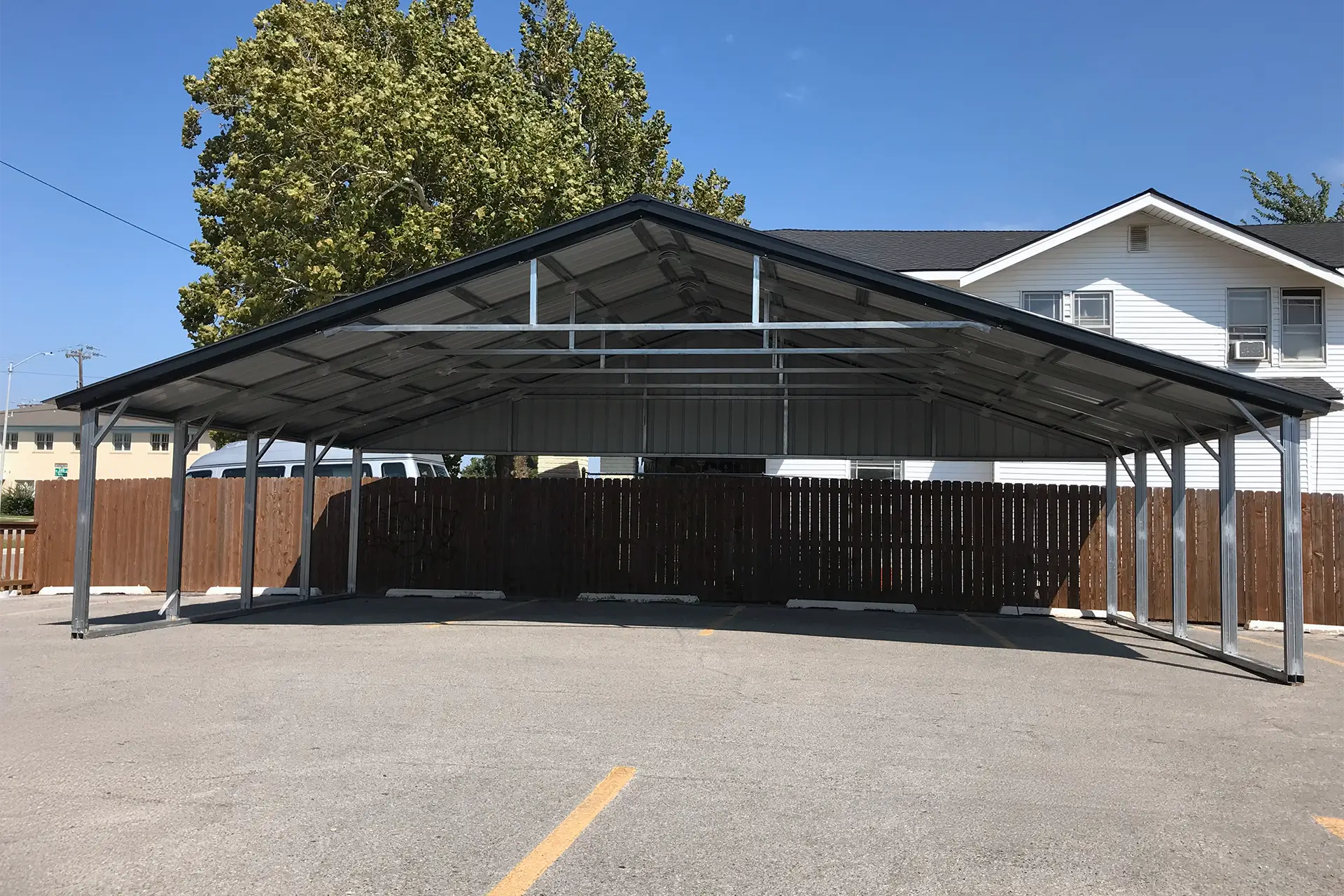
Every metal carport, garage and barn is sold with a wind rating and a snow load rating. Those two numbers decide whether your building rides out a spring storm or ends up in the neighbor’s pasture, and whether your permit gets approved the first time.
The trouble is that the numbers are easy to compare the wrong way. A “140 mph” building and a “120 mph” building may not be on the same scale, and a snow rating means little until you know which snow number your county uses. This guide explains what the ratings mean, how to look up the requirement for your exact address, and what to ask any builder before you buy.
The short version:
- A wind rating is the gust speed a building is engineered to resist. Wind pressure grows with the square of the speed, so a small jump in mph is a big jump in force.
- A snow load rating is the weight per square foot (psf) the roof is engineered to carry.
- Your local requirement comes from your building department, which uses the maps in ASCE 7, the national loads standard. You can look up the map values for your address free with the ASCE Hazard Tool.
- A rating only holds when the building is installed the way it was engineered, with the right anchors and bracing for your ground.
What a Wind Rating Means
A wind rating, written in miles per hour, is the design wind speed the frame, panels and anchors are engineered to resist. Building codes measure that speed as a 3-second gust, not a sustained wind.
The number to pay attention to is not the speed itself but the pressure it creates. Engineers start from a simple relationship: pressure in pounds per square foot equals 0.00256 times the wind speed squared. That means pressure climbs much faster than speed.
| Wind speed | Basic velocity pressure |
|---|---|
| 90 mph | about 20.7 psf |
| 105 mph | about 28.2 psf |
| 120 mph | about 36.9 psf |
| 140 mph | about 50.2 psf |
Basic velocity pressure only (0.00256 × V²). Actual design pressures also depend on building height, surrounding terrain, roof shape and whether the sides are open or enclosed. Your engineered drawings account for all of that.
Going from 120 mph to 140 mph is a 17% increase in speed but about a 36% increase in pressure. That is why heavier framing, more bracing and stronger anchors are needed to move up even one wind rating.
Two kinds of wind speed: ultimate and nominal
Since the 2010 edition of ASCE 7, codes have used ultimate design wind speeds. Older codes used nominal (allowable stress) speeds, which are lower numbers for the same location. The two convert with a simple factor: nominal speed equals ultimate speed times the square root of 0.6. For example, a 130 mph ultimate speed is roughly a 101 mph nominal speed.
Neither is “stronger.” They are two scales for the same wind, and once the code’s load factors are applied, the design pressures come out similar. What matters is that the rating on your building and the requirement from your building department are on the same scale. If you are comparing two quotes, ask each builder which basis their rating uses.
What a Snow Load Rating Means
A snow load rating is the weight, in pounds per square foot (psf), that the roof is engineered to carry. For a sense of scale, a 35 psf rating means every square foot of roof is designed to hold 35 pounds of snow and ice.
There are two snow numbers, and mixing them up is the most common mistake:
- Ground snow load is what the maps show for your location: the weight of snow expected on the ground.
- Roof snow load is what the roof actually has to carry. Engineers calculate it from the ground snow load, then adjust for roof slope, exposure to wind, how warm the building is, and drifting.
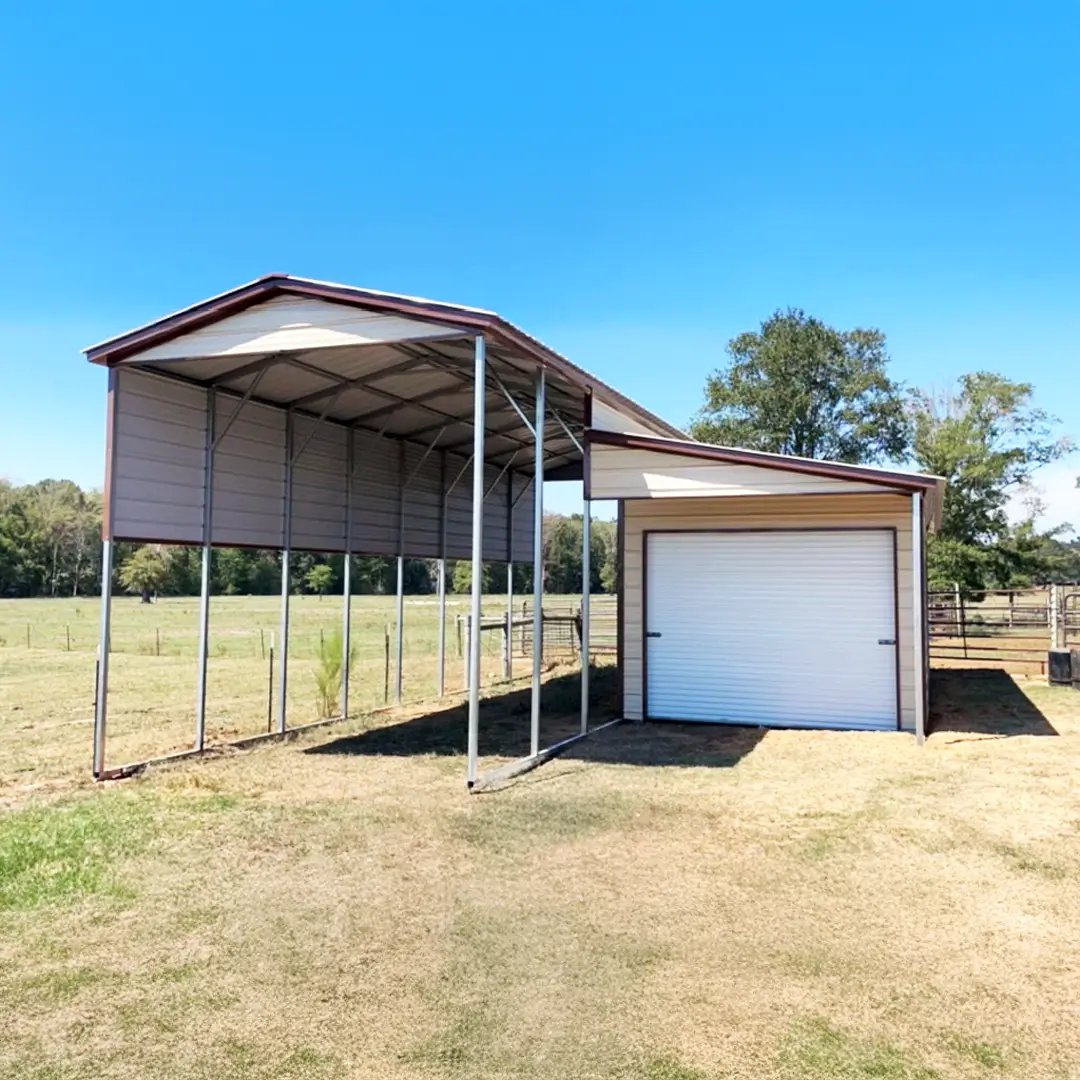
Roof style matters here. On a vertical roof the panels run from the peak to the edge, so snow and water slide off instead of sitting in the panel ribs. That is why vertical roofs carry the highest snow ratings.
The snow maps changed in ASCE 7-22
The 2022 edition of ASCE 7, which is adopted in the 2024 International Building Code, switched to new “reliability-targeted” ground snow loads. These are strength-level values, used with a different load factor than the older maps, and they now vary by the building’s risk category.
The practical result: the new map number for a location can look much higher than the old one even though the actual design roof load changed only a little. In one published example, Baltimore’s ground snow load went from 25 psf under the old maps to 60 psf under the new ones, but once the different load factors and the roof’s own weight were included, the total design roof load rose about 30%. So before comparing a building’s snow rating to a map value, ask your building department which edition of the code it enforces and which snow value it wants on the drawings.
How to Find the Requirement for Your Address
- Call your local building department first. Ask whether a permit is needed, which code edition they enforce, and what design wind speed and ground snow load they require. Some rural counties have no building code at all; many cities and some counties have local amendments that raise the minimums.
- Look up the map values yourself. The free ASCE Hazard Tool returns wind, snow, ice, rain, flood and other design values for any address in the U.S. Pick the same ASCE 7 edition your building department uses.
- Know your risk category. Codes sort buildings by how much risk a failure poses to people. Agricultural buildings and minor storage buildings are typically Risk Category I, and most homes and garages are Risk Category II. Your building department decides which applies.
- Match the drawings to the requirement. The engineered drawings for your building should show a design wind speed and snow load that meet or exceed what your building department asked for.
For more on the paperwork side, see our metal carport permit guide.
What About Tornadoes?
ASCE 7-22 added tornado design loads for the first time, but they apply only to Risk Category III and IV buildings, such as schools, hospitals and emergency facilities, in the tornado-prone region, which covers roughly the U.S. east of the Continental Divide. Risk Category I and II buildings, which include most carports, garages and barns, are not required to be designed for tornado loads because straight-line wind loads govern at their design levels.
In plain terms, no residential metal building is tornado-proof. A higher wind rating and certified anchors do make a real difference in the severe thunderstorms and straight-line winds that cause most storm damage.
What Makes a Rating Real
A wind or snow rating is a property of the whole installed building, not just the steel. These pieces all have to line up:
- Frame gauge. Heavier tubing carries more load. See our metal building gauge guide.
- Bracing. Engineered buildings add braces and closer post spacing to reach higher ratings.
- Roof style. Vertical roofs shed snow and handle wind best.
- Anchors matched to the ground. Dirt, asphalt and concrete each need a different anchor. Our building anchors guide covers each one.
- Level, stable ground. Rocky or unlevel ground can keep a building from performing as engineered.
- Professional installation to the engineered drawings.
Our ratings
Here is how East Texas Carports buildings are rated:
| Item | Rating |
|---|---|
| 14-gauge frame | Up to 120 mph wind |
| 12-gauge frame | Up to 140 mph wind |
| Vertical roof | 35 psf snow load |
Wind ratings require the certified anchors and bracing we supply and install. Our standard rebar anchors are a short-term option with no wind warranty; our upgraded certified anchor package adds a 20-year wind warranty. We provide the engineered drawings most permit offices ask for. See our FAQs for warranty details.
Questions to Ask Any Builder
- What design wind speed and snow load is this exact building engineered for?
- Is the wind rating an ultimate or a nominal speed, and which edition of ASCE 7 was it engineered to?
- Will you provide engineered drawings for my permit?
- What anchors do you use on my type of ground, and does the rating depend on them?
- Does the rating change with my building’s width, height or roof style?
- Is there a wind warranty, and what voids it?
- Who installs the building, and do they install it to the engineered drawings?
Frequently Asked Questions
Q: What wind rating do I need for a metal carport?
A: Whatever your building department requires for your address. Look up the map value with the ASCE Hazard Tool, then confirm with your local office, since local amendments can raise it.
Q: Is a higher wind rating always better?
A: More margin is never a bad thing, especially in storm-prone areas, but the rating has to meet your local requirement on the same scale (ultimate or nominal).
Q: Does snow load matter in the South?
A: It can. Ice storms and occasional heavy snow reach well into Texas, Oklahoma and Arkansas, and a building that is rated for it is far less likely to sag or fail when one hits. A vertical roof sheds both snow and ice best.
Q: Can I add a higher rating to a building I already own?
A: Sometimes, by adding bracing or upgrading anchors, but changes to a finished building should only be made with the manufacturer’s written approval and, where required, an engineer’s review.
Build to the Right Rating
Every East Texas Carports building is made at our Kilgore, Texas plant and installed by our own crews with the anchors your ground calls for. Tell us your address and we will help you match your building to your local wind and snow requirements. Call (903) 234-8922 or design your building in 3D on our website.
Sources
- ASCE Hazard Tool, American Society of Civil Engineers
- Ground Snow Loads for ASCE 7-22, STRUCTURE magazine
- 2024 IBC Significant Structural Changes: Loads, STRUCTURE magazine
- Design Wind Speeds and Wind Pressures, EDT Engineers
- Why Risk Category I and II Structures Are Not Designed for Tornado Loads, NCSEA
Ready to Price Your Metal Building?
Get a free, no-obligation quote, or design your building in our free 3D tool and see it from every angle.