Spring Savings ends in

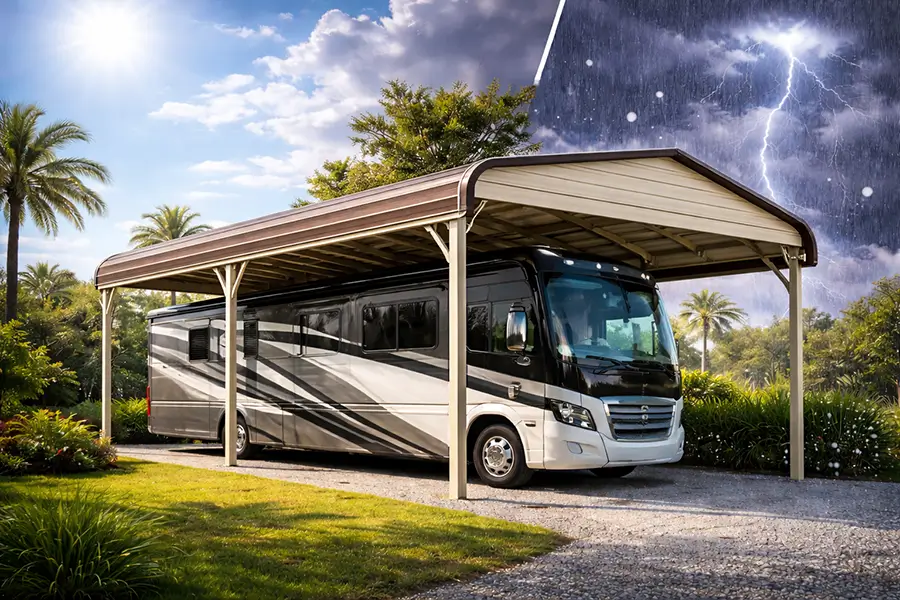
RV Carports: How to Protect Your Motorhome from Sun, Hail, and Weather Damage
Previous: Why Metal Workshops Are Ideal for Home‑Based Businesses
Next: Metal Carport Guide: Choosing, Financing & Maintenance
Your RV represents a significant investment. Whether you use it for weekend getaways or extended cross-country adventures, protecting your motorhome from the elements should be a top priority. Without proper shelter, your recreational vehicle faces constant exposure to harsh UV rays, damaging hail, and unpredictable weather patterns that can depreciate its value rapidly.
Why RV Protection Matters More Than You Think
The exterior of your motorhome takes a beating throughout the year. Consequently, many RV owners discover too late that nature's forces have caused thousands of dollars in damage. According to the Recreational Vehicle Industry Association, over 11 million households own an RV in the United States. However, a surprising number of these owners don't adequately protect their investment from weather-related deterioration.
Sun damage alone causes oxidation, fading, and cracking of your RV's exterior surfaces. Moreover, the rubber seals around windows and doors become brittle when exposed to constant sunlight. This deterioration leads to water leaks that can compromise your motorhome's interior structure. A quality metal carport structure provides the year-round protection your RV needs to maintain its condition and resale value.
The Hidden Costs of Weather Exposure
Leaving your RV exposed creates problems that extend far beyond cosmetic concerns. First, UV radiation breaks down the protective gelcoat on fiberglass RVs, making the surface chalky and dull. Second, temperature fluctuations cause materials to expand and contract, eventually leading to cracks and separations. Third, precipitation seeps into even the smallest openings, promoting mold growth and structural decay.
Hail presents perhaps the most dramatic threat. A single severe hailstorm can cause catastrophic damage to your motorhome's roof, sidewalls, and air conditioning units. The National Oceanic and Atmospheric Administration reports that the United States experiences thousands of hailstorms annually, with some producing ice chunks larger than softballs. Without overhead protection, your RV becomes an easy target for these destructive weather events.
Insurance deductibles for RV damage typically range from $500 to $2,500 per claim. Furthermore, filing multiple weather-related claims can increase your premiums or result in policy cancellation. Installing a protective structure makes financial sense when you consider these potential costs against the one-time investment in proper shelter.
Choosing the Right RV Carport Structure
Not all carports offer the same level of protection. Therefore, understanding your options helps ensure you select the most appropriate solution for your needs. Standard carports feature vertical roof designs that allow debris and precipitation to slide off easily. Additionally, these structures come in various widths, lengths, and heights to accommodate different RV sizes.
When selecting a carport, measure your motorhome carefully. You'll need to account for the height of your RV's air conditioning units, satellite dishes, and other roof-mounted accessories. Beyond that, consider adding extra width for door clearance and maneuvering room. A properly sized structure prevents accidental scrapes and provides comfortable access to your vehicle.
Steel construction offers superior durability compared to wood or fabric alternatives. Galvanized steel resists rust and withstands extreme weather conditions without warping or rotting. Meanwhile, the framework supports heavy snow loads and wind pressure that would collapse lesser structures. Quality manufacturers engineer their products to meet or exceed local building codes for wind and snow ratings.
Essential Features for Maximum Protection
A well-designed RV carport includes several key features that enhance its protective capabilities. Enclosed sides shield your motorhome from wind-driven rain and prevent UV exposure from multiple angles. Even partially enclosed options with one or two sides offer significantly better protection than open structures.
Roof pitch matters more than many people realize. A steeper pitch sheds water and snow more effectively than a flat or barely sloped roof. This design prevents pooling that could stress the structure or drip onto your RV. Additionally, proper drainage keeps the area around your motorhome dry and accessible regardless of weather conditions.
Anchoring systems secure your carport to the ground and prevent uplift during high winds. Concrete anchors provide the strongest hold, particularly in areas prone to severe storms. Some installations use ground anchors or mobile home anchors depending on soil conditions and local requirements. Never skip this crucial step, as an unsecured structure poses serious safety risks.
Installation Considerations and Site Preparation
Choosing the right location for your RV carport affects both functionality and longevity. Ideally, position the structure on level ground with good drainage. Avoid low spots where water accumulates after rain. Furthermore, check local zoning ordinances and homeowners association rules before installation, as some areas restrict the placement or size of accessory structures.
Professional installation ensures your carport meets engineering specifications and local building codes. Experienced installers understand soil conditions, proper foundation requirements, and structural reinforcement techniques. They also obtain necessary permits, which protects you from potential fines and ensures compliance with safety standards.
Site preparation typically involves clearing vegetation, leveling the ground, and potentially pouring a concrete pad. While a concrete foundation isn't always required, it provides the most stable base and prevents weeds from growing beneath your RV. Moreover, concrete makes cleaning easier and creates a professional appearance that enhances your property's overall aesthetic.
Maintenance Tips for Long-Term Performance
Even the most durable steel structures require occasional maintenance to perform optimally. Inspect your carport seasonally for loose bolts, damaged panels, or signs of rust. Tighten hardware as needed and touch up any scratched or chipped paint to prevent corrosion from spreading.
Remove debris from the roof and gutters regularly. Leaves, branches, and dirt accumulation can trap moisture and accelerate wear. During winter, clear heavy snow loads before they exceed your carport's rated capacity. This proactive approach extends your structure's lifespan and maintains its protective qualities.
Trim overhanging tree branches that could fall on your carport during storms. Similarly, ensure proper grading around the structure directs water away from the foundation. These simple maintenance tasks prevent major problems and preserve your investment for decades to come.
Maximizing Your RV's Lifespan
Combining a quality carport with proper RV maintenance creates the ideal preservation strategy. Cover your motorhome with a breathable RV cover for additional protection when stored for extended periods. However, ensure adequate ventilation to prevent moisture buildup that could promote mildew growth.
Check and maintain your RV's seals, caulking, and roof membrane even when protected by a carport. These components still age and require periodic inspection. Additionally, run your generator monthly and exercise slide-outs to keep mechanical systems in good working order.
Temperature-controlled storage inside an enclosed garage offers the ultimate protection for your RV. This option shields your motorhome from all weather elements while providing secure storage for your valuable recreational investment.
Versatile Options for Every Need
Beyond standard RV coverage, many property owners discover additional uses for their protective structures. A workshop building can serve double duty, housing your motorhome during off-season while providing workspace for maintenance and repairs. This versatility maximizes your investment and creates a functional area for multiple purposes.
For those with larger properties or commercial applications, barn-style structures offer expanded coverage and storage capacity. These buildings accommodate not only RVs but also boats, equipment, and seasonal vehicles under one roof. The open design allows for easy maneuvering and flexible interior configurations.
Making the Smart Investment Choice
Protecting your RV with a dedicated carport delivers returns that compound over time. You'll avoid costly repairs, maintain higher resale value, and extend your motorhome's functional lifespan. More importantly, you'll enjoy peace of mind knowing your vehicle stays protected through every season.
The investment in a quality RV carport pays dividends through reduced maintenance costs and preserved vehicle condition. Start by assessing your needs, measuring your motorhome, and consulting with experienced professionals who understand your local weather challenges. Check out available financing options that make protecting your investment more accessible. Your future self will thank you for taking action today to protect your recreational vehicle from tomorrow's storms.