Valentine's Sale ends in

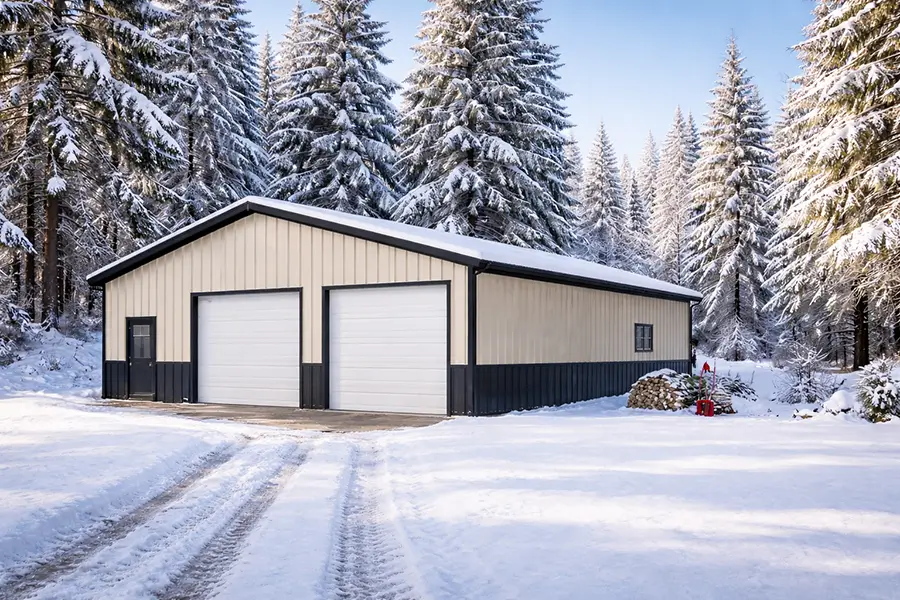
Metal Building Performance in Cold Weather
Cold weather raises important questions for property owners considering a metal building. Snow, ice, freezing winds, and repeated freeze and thaw cycles can stress any structure. When properly designed and installed, modern metal buildings are well suited to handle freezing temperatures. This article explains how metal buildings perform in winter conditions and why steel structures remain a dependable choice in cold climates.
Why steel performs well in freezing weather
Steel is naturally strong and stable in low temperatures. Unlike wood, it does not rot, warp, or weaken due to moisture exposure. Galvanized steel framing and protective coatings help resist corrosion caused by winter precipitation and seasonal freeze and thaw cycles. These material advantages allow metal buildings to maintain their structural integrity even during prolonged cold weather.
The American Iron and Steel Institute provides information about how steel's properties make it suitable for construction across various industries and temperature ranges.
In addition to the base material, manufacturing quality plays an important role. Proper steel gauge selection, protective finishes, and high quality fasteners all contribute to long term performance. Established manufacturing standards help ensure durability and consistent performance, backed by comprehensive warranty coverage for long term protection.
Cold weather challenges for metal buildings
While steel performs well in cold conditions, winter environments introduce challenges that must be addressed during design and installation. Common issues include condensation, heat loss, snow and ice accumulation, and soil movement caused by freezing temperatures. Metal buildings perform best when these factors are considered together rather than individually.
Condensation and moisture control
Condensation occurs when warm interior air comes into contact with cold metal surfaces. This can lead to moisture buildup, dripping, and long term corrosion if not properly managed. Effective moisture control depends on insulation continuity and proper air barriers, especially in cold climates. These principles apply directly to metal building systems where insulation, vapor control, and air sealing help reduce temperature differences between interior air and exterior panels.
For more technical insight, controlling cold weather condensation using insulation requires specific strategies that help reduce moisture problems in metal structures.
Heat loss and thermal performance
Metal conducts heat more readily than many other building materials. Without proper insulation, this can lead to heat loss and increased energy costs during winter months. Continuous insulation systems, insulated panels, and properly sealed joints help reduce thermal bridging and maintain consistent interior temperatures.
Matching insulation strategy with building use is critical. Storage buildings, workshops, and occupied spaces all have different thermal needs. Proper insulation selection improves comfort, lowers operating costs, and reduces the risk of condensation.
Snow and ice loads on metal roofs
Snow and ice can add significant weight to a roof, particularly when accumulation is uneven. Metal buildings are engineered to meet local snow load requirements based on building codes and regional climate data. Roof slope, panel profile, and framing spacing all influence how snow loads are managed.
Understanding snow load safety is essential for engineered roof systems in colder regions. Design standards for snow loads are often based on criteria developed by professional engineering organizations such as the American Society of Civil Engineers.
Ground conditions and anchoring in winter
In areas where the ground freezes, soil expansion and frost heave can affect building stability. If not properly addressed, these movements can cause shifting or misalignment over time. The American Concrete Institute provides resources on how frost heave affects foundations and structural systems. Proper anchoring systems and base rail designs help metal buildings remain stable during seasonal ground movement.
Insulation strategies for freezing temperatures
Insulation plays a major role in winter performance for enclosed metal buildings. Effective insulation helps retain heat, reduce condensation, and improve interior comfort. Common insulation options include:
- Fiberglass insulation, which is cost effective when installed with proper air sealing
- Rigid board insulation, which provides higher thermal resistance in limited space
- Spray foam insulation, which seals gaps and reduces air infiltration
- Insulated metal panels, which combine structure and insulation in a single system
The Metal Building Manufacturers Association offers guidance on energy efficiency and insulation systems designed specifically for metal buildings and cold weather performance.
Manufacturing and installation quality
Even the best materials depend on proper fabrication and installation. Precision manufacturing, correct steel gauges, and professional installation practices all contribute to a building's ability to withstand winter conditions. Proper installation also supports warranty coverage and long term performance.
Quality control throughout the manufacturing and installation process ensures buildings meet design expectations for strength and durability, as outlined in warranty documentation.
Anchors and base rails
Anchoring systems must be selected based on site conditions. Concrete foundations, ground anchors, and base rails each serve different purposes depending on soil type and climate. Proper anchoring helps prevent movement caused by freezing soil and winter winds.
Roof design and winter performance
Roof design influences how well a metal building handles snow and ice. Panel profiles, roof slope, and support spacing all affect load distribution. Well designed roofs allow snow to shed naturally while maintaining structural strength.
Winter maintenance for metal buildings
Routine maintenance improves winter reliability and extends the life of a metal building. Recommended practices include:
- Removing excessive snow evenly from roofs when safe to do so
- Inspecting interior surfaces for condensation after temperature changes
- Repairing damaged coatings or fasteners promptly
- Checking anchors and base rails after hard freezes
Planning and maintenance guidance in customer resource materials helps owners prepare for long term ownership.
Regional planning and building codes
Building codes and regional climate data influence how metal buildings are designed for winter conditions. Local jurisdictions often rely on model codes and standards developed by organizations such as the International Code Council.
Climate data from sources like the National Oceanic and Atmospheric Administration helps designers understand snowfall patterns and temperature trends for specific regions.
Selecting the right metal building for your climate
Cold weather conditions vary by region. Areas with occasional freezing require different design considerations than regions with heavy snowfall and extended cold seasons. Choosing appropriate roof styles, insulation options, and anchoring systems based on regional needs ensures optimal performance.
Coverage areas and regional service details are available on the service area page.
Final thoughts
Metal buildings perform well in freezing temperatures when they are properly engineered, insulated, and installed. Galvanized steel framing, thoughtful roof design, effective insulation, and secure anchoring all contribute to dependable winter performance. By working with an experienced manufacturer and following cold weather best practices, property owners can rely on their metal buildings for long term durability and value.